
On this page 34 sections
- What Is Technical SEO?
- Why Does Technical SEO Matter?
- 1. Improves Website Crawling and Indexing
- 2. Improves Website Loading Speed
- 3. Improves Mobile-Friendliness
- 4. Helps Improve Core Web Vitals
- 5. Prevents Duplicate Content Problems
- 6. Improves Website Security
- What Does Technical SEO Include?
- What Is a Technical SEO Audit?
- 1. Website Crawling and Indexing Audit
- 2. Website Speed and Performance Audit
- 3. Broken Links and Redirect Audit
- 4. Mobile-Friendliness Audit
- 5. Structured Data and Schema Audit
- Technical SEO Checklist: 12 Things Every Website Should Have
- Technical SEO vs On-Page SEO vs Off-Page SEO
- Best Technical SEO Tools for Website Optimization
- Which Technical SEO Tool Should You Use?
- Common Website SEO Issues That Can Affect Google Rankings
- How Often Should You Perform a Technical SEO Audit?
- Why Choose Professional Technical SEO Services?
- Frequently Asked Questions (FAQs)
- 1. What is technical SEO in simple words?
- 2. Why is technical SEO important for a website?
- 3. What is included in a technical SEO audit?
- 4. How much does technical SEO cost?
- 5. Can technical SEO improve Google rankings?
- 6. Which tools are best for technical SEO?
- 7. How long does technical SEO take to show results?
- 8. What is the difference between technical SEO and on-page SEO?
- 9. Does technical SEO matter for WordPress websites?
- 10. Do small businesses need technical SEO services?
- Final Thoughts
A beautiful website is not enough to achieve higher rankings on Google. Your website also needs a strong technical foundation that allows search engines to discover, crawl, understand, and index its pages properly.
This is where technical SEO services become important. Technical SEO focuses on improving your website's infrastructure, loading speed, mobile usability, security, and search engine accessibility.
Whether you run a business website, an online store, or a service-based company, technical SEO helps search engines understand your website while providing visitors with a better browsing experience.
In this guide, we will explain what technical SEO is, why it matters, common website SEO issues, and how a technical SEO audit can improve your website's overall search performance.
What Is Technical SEO?
Technical SEO is the process of optimizing a website's technical structure to help search engines crawl, render, and index its pages more effectively.
It involves improving website speed, mobile responsiveness, URL structure, XML sitemaps, robots.txt files, canonical tags, HTTPS security, structured data, and other technical elements.
Unlike content SEO, which focuses on keywords and website content, technical SEO ensures that search engines can properly access and understand your website.
For example, if you publish an excellent blog post but accidentally add a noindex tag, Google may not include that page in its search results. Technical SEO helps identify and prevent these problems.
Why Does Technical SEO Matter?
Technical SEO is important because even high-quality content can struggle to perform when search engines cannot properly access or understand your website.
A technically optimized website provides a better foundation for organic search visibility, user experience, and long-term business growth.
Here are some important benefits:
1. Improves Website Crawling and Indexing
Search engines use automated crawlers to discover website pages and understand their content.
If your website has broken links, incorrect robots.txt rules, or indexing restrictions, important pages may not be discovered or indexed.
Technical SEO helps search engines access your important pages and understand your website structure.
2. Improves Website Loading Speed
Website speed affects user experience and can influence search performance.
Visitors are more likely to leave a website when pages take too long to load.
Technical SEO includes:
- Optimizing image sizes and formats.
- Reducing unnecessary JavaScript and CSS.
- Enabling browser caching.
- Improving server response time.
- Using content delivery networks (CDNs).
- Reducing unnecessary redirects.
A faster website creates a smoother experience for visitors, especially on mobile devices.
3. Improves Mobile-Friendliness
Most people browse websites through smartphones. If your website does not work properly on mobile devices, visitors may struggle to navigate pages, read content, or complete forms.
Technical SEO focuses on responsive layouts, readable text, mobile-friendly navigation, and properly sized images.
Google primarily uses the mobile version of website content for indexing and ranking.
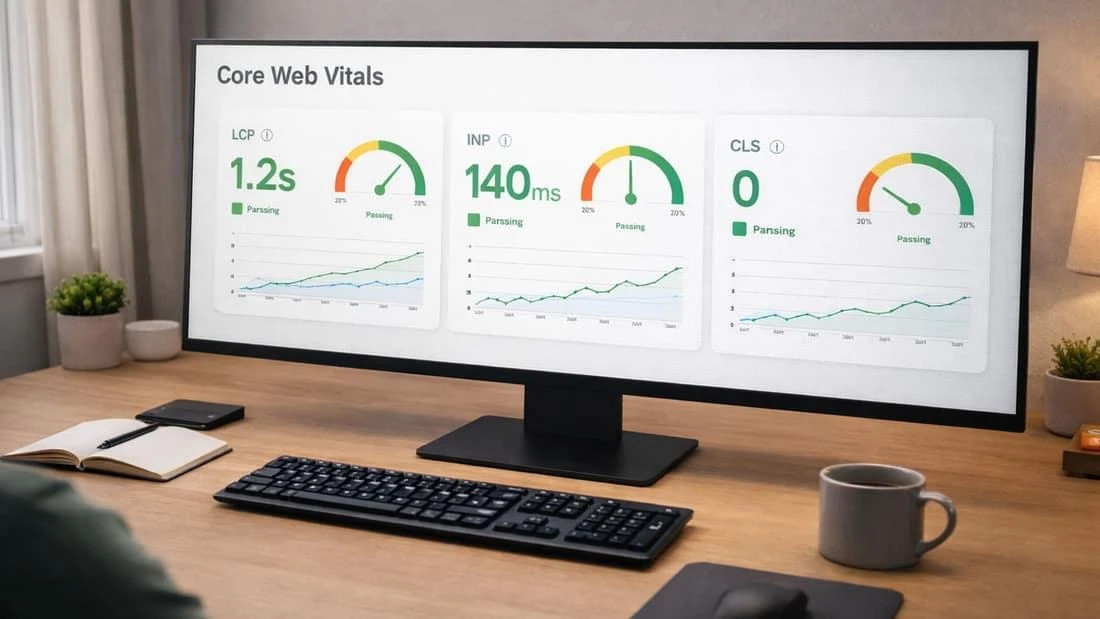
4. Helps Improve Core Web Vitals
Core Web Vitals are Google's metrics for evaluating important aspects of user experience.
The three primary metrics are:
| Metric | What It Measures | Good Target |
|---|---|---|
| LCP | Loading performance | 2.5 seconds or less |
| INP | Interaction responsiveness | 200 milliseconds or less |
| CLS | Visual stability | 0.1 or less |
Improving these metrics can help create a better user experience.
However, Core Web Vitals alone do not guarantee higher Google rankings. They are part of a broader page experience and search optimization strategy.
5. Prevents Duplicate Content Problems
Sometimes the same website content becomes accessible through multiple URLs.
For example:
Depending on website configuration, these URLs may create duplication or canonicalization issues.
Canonical tags help communicate which version of a page should be treated as the preferred URL.
A proper technical SEO strategy helps manage duplicate pages and maintain a cleaner website structure.
6. Improves Website Security
Website security is another important part of technical optimization.
HTTPS encrypts communication between your website and visitors, helping protect sensitive information.
A secure website also builds customer confidence, especially for businesses that collect contact details, process payments, or manage customer accounts.
What Does Technical SEO Include?
Technical SEO covers several important areas of website optimization.
The following table highlights the main technical SEO elements and why they matter.
| Technical SEO Element | Purpose | SEO Benefit |
|---|---|---|
| XML Sitemap | Lists important website URLs | Helps search engines discover pages |
| Robots.txt | Controls crawler access | Prevents unwanted crawling |
| Canonical Tags | Identifies preferred URLs | Helps manage duplicate content |
| HTTPS Security | Encrypts website connections | Improves website security |
| Core Web Vitals | Measures user experience | Helps improve page experience |
| Mobile Optimization | Improves smartphone usability | Supports mobile-first indexing |
| Schema Markup | Provides structured information | Makes pages eligible for rich results |
| 301 Redirects | Sends visitors to new URLs | Helps manage URL changes |
| Internal Linking | Connects related pages | Improves navigation and discovery |
| 404 Error Fixes | Resolves broken page requests | Improves website usability |
These elements work together to create a technically healthy website.
What Is a Technical SEO Audit?
A technical SEO audit is a detailed examination of your website to identify problems that may affect its crawling, indexing, performance, and search visibility.
It helps website owners understand what is working, what is broken, and which improvements should be prioritized.
A professional technical SEO audit typically examines the following areas:
1. Website Crawling and Indexing Audit
Check whether search engines can access and index important pages.
Common problems include:
- Pages accidentally marked as noindex.
- Important URLs blocked by robots.txt.
- Crawl errors and server response issues.
- Missing pages in XML sitemaps.
- Orphan pages without internal links.
2. Website Speed and Performance Audit
Evaluate how quickly your website loads and responds to user interactions.
Check:
- Largest Contentful Paint (LCP).
- Interaction to Next Paint (INP).
- Cumulative Layout Shift (CLS).
- Image optimization.
- JavaScript and CSS performance.
- Server response time.
3. Broken Links and Redirect Audit
Broken internal links can create frustrating experiences for visitors and make website navigation more difficult.
An audit should identify:
- 404 errors.
- Redirect chains.
- Redirect loops.
- Incorrect 301 redirects.
- Broken internal and external links.
4. Mobile-Friendliness Audit
Check whether your website displays and functions correctly across smartphones, tablets, and desktop devices.
Pay attention to:
- Responsive layouts.
- Mobile navigation.
- Text readability.
- Button sizes.
- Image display.
- Mobile page performance.
5. Structured Data and Schema Audit
Structured data helps search engines understand specific information on your website.
Depending on the page type, relevant schema may include:
- Organization.
- LocalBusiness.
- Article.
- BreadcrumbList.
- Product.
- Service.
Schema markup must accurately represent visible page content and follow Google's guidelines. Adding schema does not guarantee rich results.
Technical SEO Checklist: 12 Things Every Website Should Have
If you want to improve your website's technical SEO, use this practical checklist.
| No. | Technical SEO Check | What to Verify |
|---|---|---|
| 1 | HTTPS | Website uses a valid SSL certificate |
| 2 | XML Sitemap | Sitemap exists and includes important URLs |
| 3 | Robots.txt | Important pages are not accidentally blocked |
| 4 | Indexing | Important pages are indexable |
| 5 | Canonical Tags | Preferred URLs are correctly specified |
| 6 | Page Speed | Pages load efficiently |
| 7 | Mobile Responsiveness | Website works across devices |
| 8 | Broken Links | Important internal links work |
| 9 | Redirects | Redirects use appropriate status codes |
| 10 | Schema Markup | Relevant structured data is implemented |
| 11 | Internal Linking | Important pages are properly connected |
| 12 | Core Web Vitals | LCP, INP, and CLS are within good thresholds |
Completing these checks provides a strong starting point for improving your website's technical health.
Technical SEO vs On-Page SEO vs Off-Page SEO
Technical SEO is one of the three major areas of search engine optimization. Each focuses on a different aspect of improving organic search visibility.
| SEO Type | Main Focus | Examples |
|---|---|---|
| Technical SEO | Website infrastructure | Speed, indexing, crawling, security |
| On-Page SEO | Website content | Keywords, headings, meta tags, content |
| Off-Page SEO | External authority | Backlinks, brand mentions, digital PR |
For the best results, businesses should combine all three approaches rather than relying on only one.
For example, technical SEO ensures your pages can be accessed, on-page SEO makes the content relevant, and off-page SEO helps build your website's authority.
Best Technical SEO Tools for Website Optimization
Using the right tools makes it easier to identify website SEO issues and monitor improvements.
Here are some useful tools for technical SEO:
| Tool | Main Purpose | Cost |
|---|---|---|
| Google Search Console | Indexing, crawl reports, search performance | Free |
| Google PageSpeed Insights | Website speed and Core Web Vitals | Free |
| Screaming Frog SEO Spider | Website crawling and technical audits | Free version available; paid plan |
| Google Rich Results Test | Structured data eligibility testing | Free |
| Bing Webmaster Tools | Crawling and indexing insights | Free |
| Lighthouse | Website performance and technical checks | Free |
Which Technical SEO Tool Should You Use?
Google Search Console is an excellent starting point for identifying indexing and search visibility problems.
PageSpeed Insights is useful for checking loading performance, while Screaming Frog can help discover broken links, redirect issues, missing metadata, and other technical problems.
Using multiple tools together provides a more complete picture of your website's technical health.
Common Website SEO Issues That Can Affect Google Rankings
Many businesses invest in content creation and link building but overlook technical problems that can limit their website's search performance.
Some common website SEO issues include:
1. Pages Not Indexed by Google
Important pages may not appear in search results because of noindex tags, crawl restrictions, or other indexing problems.
2. Slow Website Loading
Large images, unnecessary scripts, and poor server performance can slow down your website.
3. Incorrect Canonical Tags
Incorrect canonical URLs can confuse search engines about which page should be treated as the preferred version.
4. Broken Internal Links
Broken links interrupt navigation and make it harder for visitors and crawlers to discover important content.
5. Duplicate Pages
Duplicate URLs can create unnecessary crawling and canonicalization challenges.
6. Missing XML Sitemap
Without a properly configured sitemap, search engines may have more difficulty discovering some important URLs.
7. Poor Mobile Experience
Websites that do not adapt properly to smaller screens can create usability problems.
8. Incorrect Redirect Configuration
Redirect chains, loops, and irrelevant redirects can create accessibility and crawling issues.
Identifying and fixing these problems is an important part of professional technical SEO services.
How Often Should You Perform a Technical SEO Audit?
A technical SEO audit should not be treated as a one-time task.
For most business websites, a quarterly audit is a reasonable starting point. However, large websites, e-commerce stores, and frequently updated websites may need more frequent monitoring.
You should also perform a technical SEO audit after:
- Launching a new website.
- Migrating to another hosting provider.
- Changing your website's URL structure.
- Installing a new theme or major plugin.
- Redesigning important website pages.
- Making significant development changes.
Regular monitoring helps identify website SEO issues before they become larger problems.
Why Choose Professional Technical SEO Services?
Technical SEO requires a combination of SEO knowledge, website development experience, and analytical skills.
While basic checks can be performed using free tools, complex issues may require professional investigation and implementation.
At Sizaria Technologies, we help businesses improve their website performance through technical SEO, website optimization, and search engine optimization strategies.
Our technical SEO approach focuses on:
- Comprehensive technical SEO audits.
- Website crawling and indexing improvements.
- Core Web Vitals and page speed optimization.
- XML sitemap and robots.txt configuration.
- Canonical tags and redirect management.
- Structured data and schema implementation.
- Mobile usability improvements.
- Broken link and website error resolution.
- Ongoing technical SEO monitoring.
Whether you operate a small business website or a growing e-commerce platform, our goal is to build a technically sound website that supports long-term organic growth.
Explore our professional SEO services to learn how we can help improve your website's search visibility.
If your website also needs structural improvements or performance-focused development, explore our web development services.
Frequently Asked Questions (FAQs)
1. What is technical SEO in simple words?
Technical SEO is the process of improving your website's technical structure so search engines can crawl, understand, and index your pages properly. It includes website speed, mobile optimization, indexing, security, and structured data.
2. Why is technical SEO important for a website?
Technical SEO helps search engines access your website, improves user experience, identifies indexing problems, and creates a strong foundation for organic search visibility.
3. What is included in a technical SEO audit?
A technical SEO audit typically includes website crawling, indexing checks, XML sitemap analysis, robots.txt verification, page speed testing, Core Web Vitals, broken links, redirects, canonical tags, and schema validation.
4. How much does technical SEO cost?
Technical SEO pricing depends on website size, complexity, existing technical problems, and the level of optimization required. Small business websites generally require less work than large e-commerce platforms.
5. Can technical SEO improve Google rankings?
Technical SEO can help remove technical barriers that prevent search engines from accessing and understanding website content. However, rankings also depend on content relevance, competition, authority, and other factors.
6. Which tools are best for technical SEO?
Google Search Console, Google PageSpeed Insights, Screaming Frog, Lighthouse, and Google Rich Results Test are useful tools for identifying and resolving technical SEO problems.
7. How long does technical SEO take to show results?
The timeline depends on the severity of technical problems, how quickly fixes are implemented, and when search engines recrawl and process the updated pages. Some improvements can be noticed relatively quickly, while ranking changes may take longer.
8. What is the difference between technical SEO and on-page SEO?
Technical SEO focuses on website infrastructure, crawling, indexing, speed, and usability. On-page SEO focuses on content optimization, keywords, headings, internal links, and metadata.
9. Does technical SEO matter for WordPress websites?
Yes. WordPress websites can experience indexing problems, duplicate URLs, slow loading, plugin conflicts, and incorrect metadata. Technical SEO helps identify and resolve these issues.
10. Do small businesses need technical SEO services?
Yes. Small businesses need a technically accessible, fast, secure, and mobile-friendly website to build a strong foundation for organic search visibility and online growth.
Final Thoughts
Technical SEO is an essential part of building and maintaining a successful website. Without a strong technical foundation, even high-quality content and effective marketing strategies may struggle to deliver their full potential.
From website speed and mobile usability to crawling, indexing, and structured data, every technical element contributes to a better website experience.
If your website is experiencing indexing problems, slow loading, broken links, or declining organic visibility, investing in professional technical SEO services can help identify and resolve these issues.
Ready to improve your website's technical SEO?
Contact Sizaria Technologies for professional SEO solutions and take the next step toward better website performance and organic growth.








Leave a comment