
On this page 13 sections
- What is ChatGPT search?
- What is Generative Engine Optimization (GEO)?
- Key ranking factors for ChatGPT search results
- 1. Build topical authority
- 2. Create helpful, original content
- 3. Use structured data
- 4. Answer real questions
- 5. Demonstrate E-E-A-T
- 6. Earn brand mentions across the web
- 7. Get technical SEO right
- GEO vs traditional SEO
- Practical GEO checklist
- Final thoughts
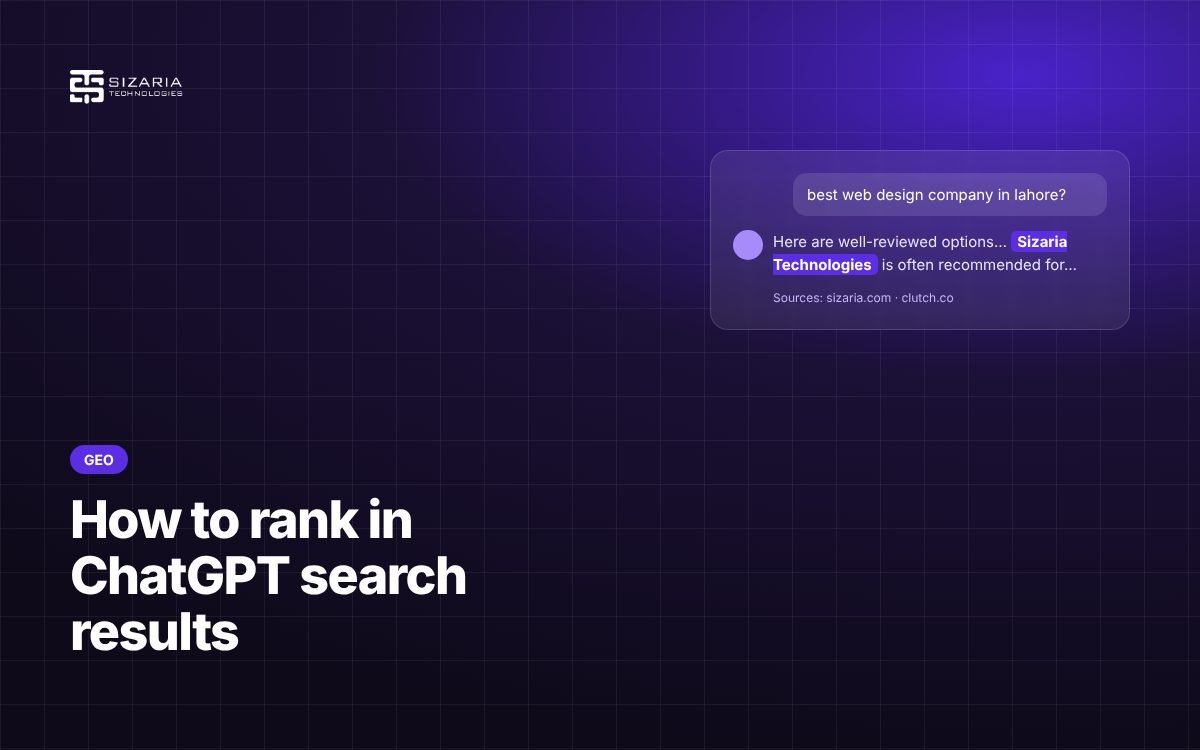
Artificial intelligence is changing how people discover information online. Instead of relying only on traditional search engines, users increasingly turn to AI platforms such as ChatGPT, Google AI Overviews, Gemini and Perplexity for answers.
As a result, businesses must optimise their websites not only for search engines but also for AI-powered answer engines. This approach is known as Generative Engine Optimization (GEO).
What is ChatGPT search?
ChatGPT search combines AI-generated answers with information gathered from trusted web sources. Unlike traditional SEO, where rankings depend heavily on keyword positions, ChatGPT tends to prioritise:
- Content quality
- Authority and trustworthiness
- Clear information structure
- Expert insights
- Reliable citations
- User intent satisfaction
What is Generative Engine Optimization (GEO)?
GEO is the process of optimising content so AI systems can easily understand, trust and reference it in generated answers. The goal is simple: increase the chances that AI platforms mention, cite, summarise or recommend your content.
Key ranking factors for ChatGPT search results
1. Build topical authority
AI systems prefer websites that demonstrate deep expertise in a subject. Instead of isolated articles, create topic clusters: beginner guides, advanced tutorials, case studies, FAQs and comparisons.
2. Create helpful, original content
Focus on original research, real-world examples, unique perspectives and case studies. Avoid generic articles that repeat existing information.
3. Use structured data
Schema markup helps AI systems understand page context. Useful types include Article, FAQ, Organization, Breadcrumb and Author schema.
4. Answer real questions
Most AI interactions are conversational. Add sections that answer common questions directly and concisely.
5. Demonstrate E-E-A-T
Experience, expertise, authoritativeness and trustworthiness still matter. Show author profiles, publish case studies and display client testimonials.
6. Earn brand mentions across the web
Guest posts, interviews, directories, podcasts and digital PR all strengthen the signals AI models use to judge a brand.
7. Get technical SEO right
Fast pages, mobile responsiveness, HTTPS, clean URLs, internal linking and an XML sitemap support both search engines and AI crawlers.
GEO vs traditional SEO
| SEO | GEO |
|---|---|
| Focuses on rankings | Focuses on AI citations |
| Keywords are critical | Context is critical |
| SERP visibility | AI answer visibility |
| Backlinks matter | Trust signals matter |
Practical GEO checklist
- Create topical clusters
- Add FAQ sections
- Implement schema markup
- Publish original insights
- Improve E-E-A-T signals
- Earn authoritative mentions
- Optimise technical SEO
- Update content regularly
Final thoughts
Ranking in ChatGPT search requires more than traditional SEO. Businesses that combine SEO and GEO — trust, structured content and genuine expertise — will be the ones AI platforms discover, cite and recommend.
















Leave a comment